TL;DR
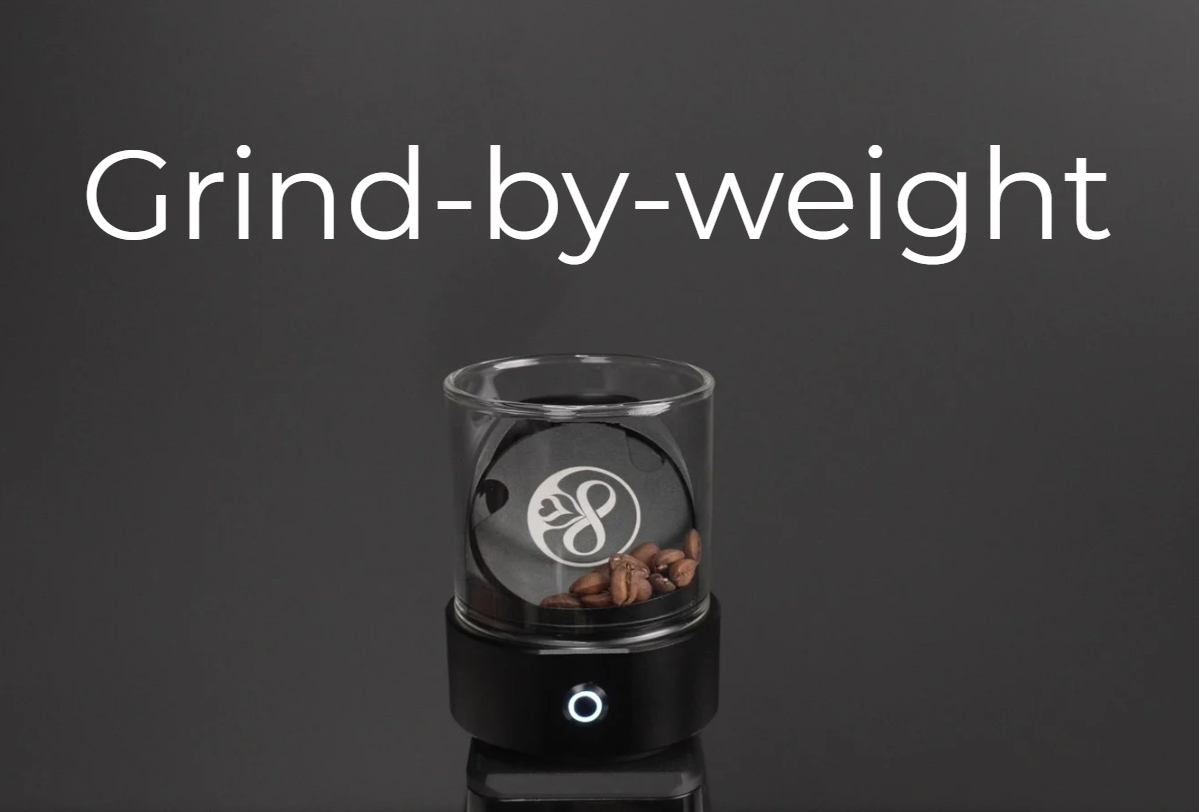
- Grind by weight is usually a feature of expensive grinders. We added it to the grinder you already own, with a firmware update for the Slow Feeder and a Bluetooth scale.
- The first real test overshot by 1.2 g, because ground coffee leaves the grinder a few seconds after the beans go in. The fix: the feeder now measures that delay at the start of every dose.
- On the Weber EG-1 we ran 10 doses in a row at 14.0 g. 9 of 10 landed within ±0.1 g. The one miss: we forgot to refill the beans.
- For bigger batches, a new 6-hole feeder disc feeds up to 35 g of beans per minute, and a new hopper holds 250 g of beans on top of the feeder.
- Grind by weight is now in public beta for the Slow Feeder Metal, Ultra and Pro V2, for free.
Why grind by weight
If you single dose, you know the routine. Weigh the beans, grind, weigh the coffee, notice you are off by a few tenths, adjust, and do it all again tomorrow. Grinders that dose by weight on their own exist, but they cost a lot, and even many expensive grinders do not have it.
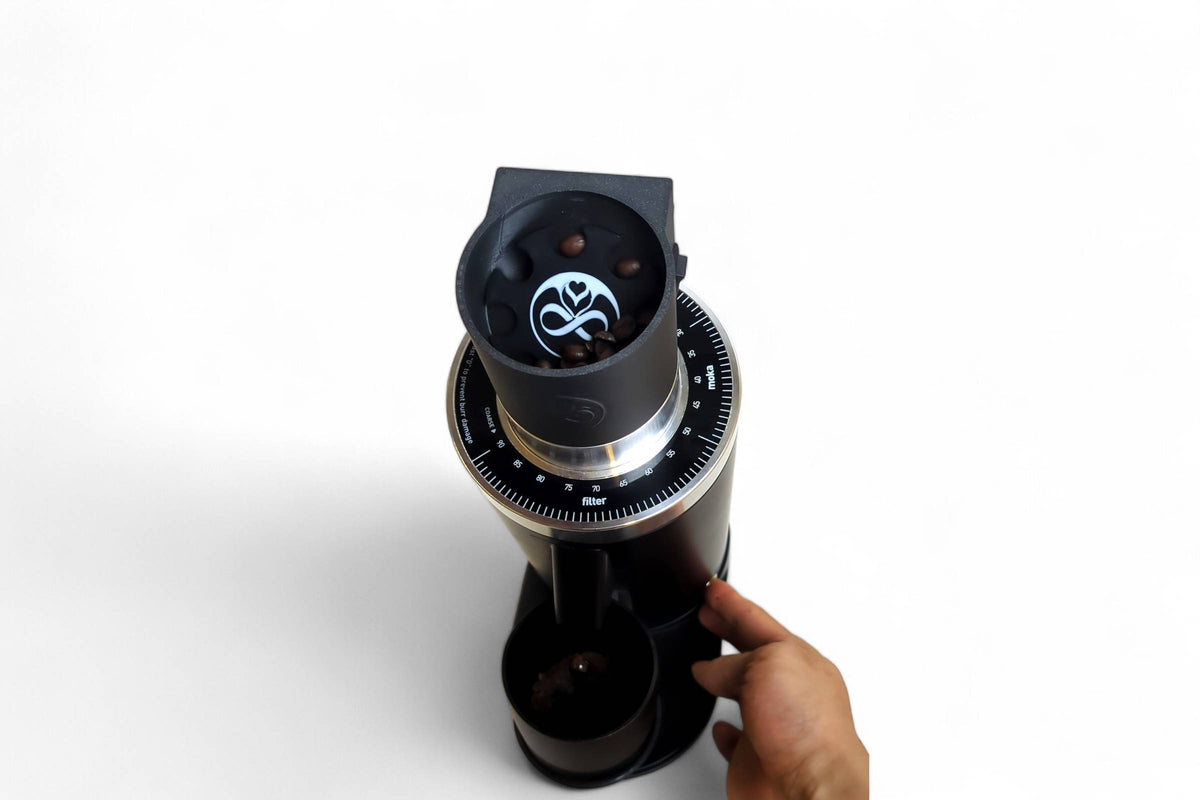
Our Slow Feeder already drops the beans into your grinder a few at a time. So we asked a simple question: what if the feeder knew how much coffee was in the cup? Then it could stop at exactly the right moment, on any grinder it fits.
Step 1: teaching the feeder to read a scale

We connected the Slow Feeder to a BOOKOO scale over Bluetooth. From that moment, the feeder knows exactly what the scale shows.
For the first test there was no grinder at all. The feeder dropped beans straight onto the scale on a test stand, with a target of 14 g. It stopped on target on the very first try, accurate to a single bean.
That proved the idea. But a grinder in between changes everything.
Step 2: a real grinder, and the first failure
Next, the beans went into a Timemore grinder, with the scale and the cup underneath. The first run missed. It overshot the target by 1.2 g.

Here is why. A bean does not turn into coffee in the cup the moment it drops. It needs a few seconds to pass through the burrs and out of the chute. So when the scale shows 14.0 g and the feeder stops, there is still coffee on its way. That coffee lands in the cup a moment later, and the dose ends up over the target.
Our second idea was to slow down for the last gram: if the gap between two beans is longer than the grinder's delay, every bean is weighed before the next one drops. It worked, but it took so long that the Timemore switched itself off in the middle of the dose. Grinders with an automatic switch-off, like the Timemore at about 60 seconds, do not like slow doses.
The fix that worked: use the first beans of every dose to measure the grinder. The feeder drops a few beans slowly, waits for the scale to settle and remembers how long the coffee takes to come out. Then it feeds at full speed, and slows down again just before the target. Result: 14 g, and the grinder stayed on.
How a dose works now
The firmware turned that fix into five steps that run on every dose:

- Zero. The feeder tares the scale and waits for a steady zero.
- Calibrate. It feeds slowly until the first 0.6 g arrives in the cup, pauses, and measures how much coffee keeps coming out and how long it takes. This is your grinder's delay. It is skipped for doses under 4 g.
- Main feed. It feeds at the speed you set on the dial.
- Slow down. It slows down early, based on what is still inside the grinder.
- Stop short and top up. It stops a little before the target on purpose, waits for the scale to settle, then tops up in short pulses until the dose is within 0.1 g.
Because the feeder measures your grinder by itself, there is no calibration for you to do. The calibration step takes about 10 seconds. If you keep the same grinder, beans and grind size, you can switch "Calibrate each dose" off on the phone page and the feeder uses the saved calibration, which makes every dose faster.
Step 3: does it work every time?
One good dose can be luck. So we moved to a second grinder, the Weber Workshops EG-1, and asked the more important question: is it consistent?
Setting the target
Before the test, we needed an easy way to set the dose. There are now two:
- On the scale. Press the feeder button three times to connect to the scale. Put your empty cup on the scale and tare it, put the amount of beans you want in the cup, and press the feeder button twice. The LED blinks three times: target saved.
- On your phone. Open the grind by weight phone page, connect, and type in the target. You can watch every dose live as a curve, start and stop it, and download your last 10 doses as a CSV file.

10 doses in a row
Same beans, same grinder, target 14.0 g, calibration on every dose. These are the results, straight from the scale:

| Dose | 1 | 2 | 3 | 4 | 5 | 6 | 7 | 8 | 9 | 10 |
|---|---|---|---|---|---|---|---|---|---|---|
| Final weight (g) | 13.9 | 14.0 | 13.9 | 13.9 | 10.3* | 13.9 | 13.9 | 14.1 | 14.0 | 14.1 |
* Dose 5 ran out of beans. We forgot to refill the feeder.
What the numbers say:
- 9 of 10 doses landed within ±0.1 g of the target, between 13.9 and 14.1 g.
- The average of those nine doses was 13.97 g. The biggest gap between two doses was 0.2 g.
- 0.1 g on a 14 g dose is less than 1%.
- The one miss was not a dosing error. The feeder stopped because no more beans were coming, which is exactly what it should do.
- The time per dose varied more than the weight: between 52 and 114 seconds in this test. That is the trade-off of dosing to the tenth of a gram. Each dose started with its own calibration, and the final top-up pulses take as long as they need. With calibration switched off, doses are faster.
Step 4: bigger batches and more beans
With grind by weight working on the Timemore and the EG-1, two practical problems were left.
Problem 1: the grinder switches off
Many grinders have an automatic switch-off. On the Timemore and grinders like it, a bigger batch can take so long, even at the maximum feed speed, that the grinder turns itself off before the dose is done.
So we machined a new feeder disc with 6 holes. At full speed it feeds 25 to 35 g per minute, compared to 15 to 20 g with the original 3-hole disc. There is also a 2-hole disc for an even slower feed, 10 to 15 g per minute. And if that is still not enough for your grinder, we are working on another solution as well.

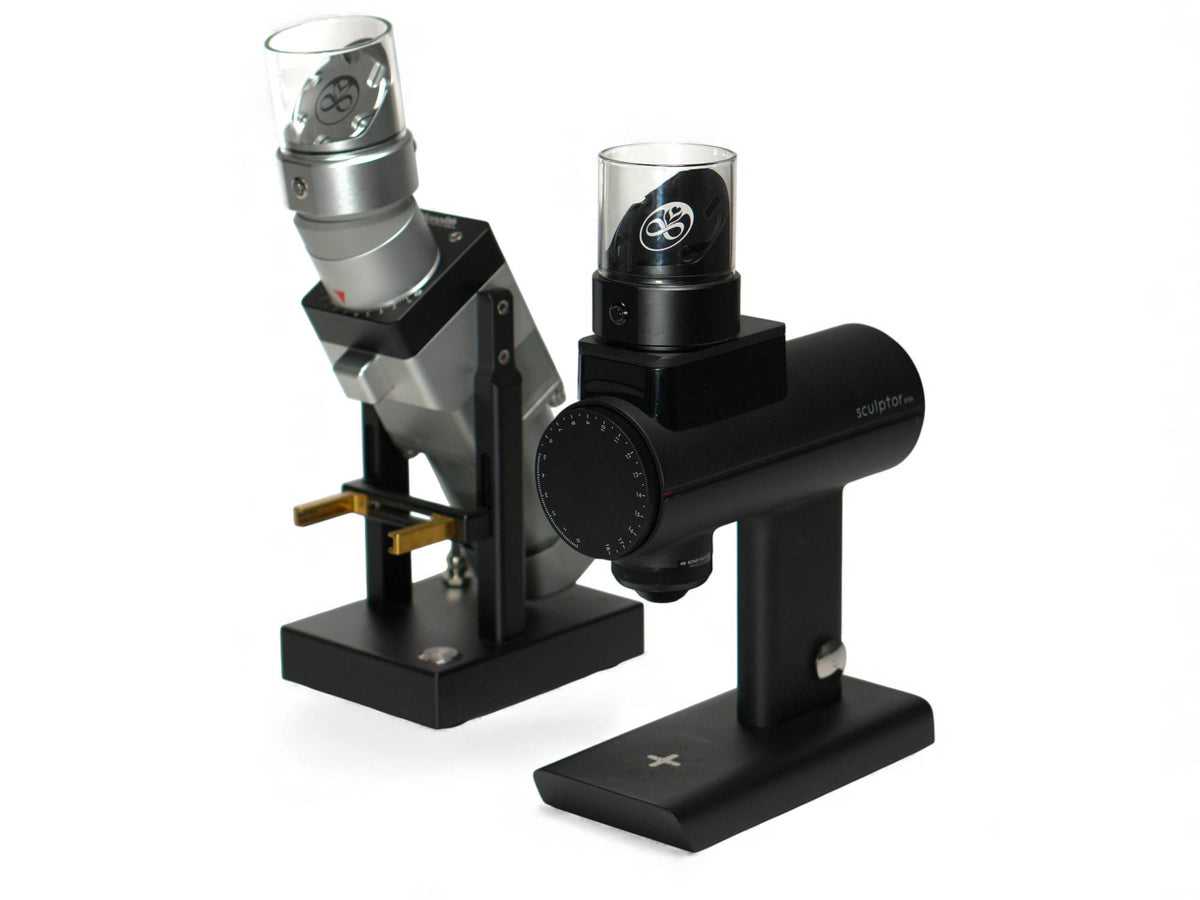
While we were machining the new discs, we also made a full metal version of the Slow Feeder, for everyone who prefers it without glass.

Problem 2: more beans on top
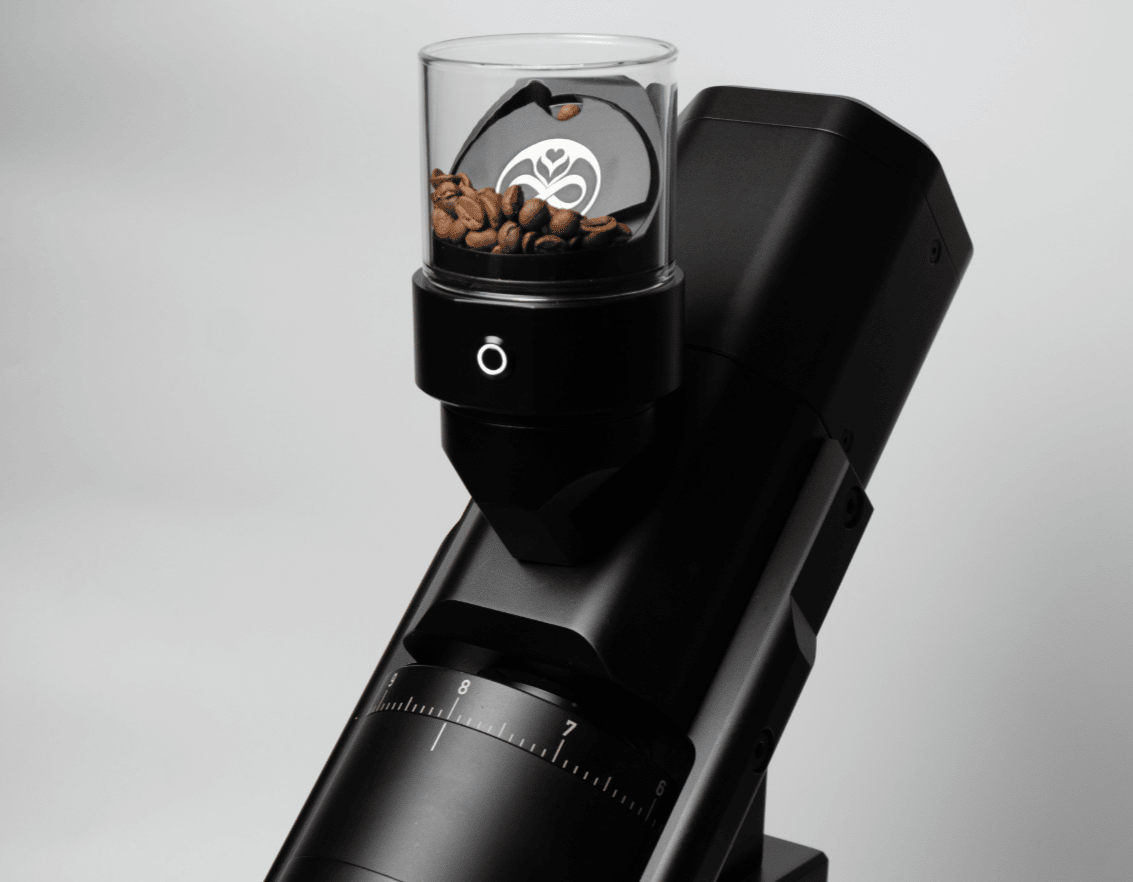
To make grind by weight really convenient, you want enough beans for several doses in a row. Our new hopper sits on top of the Slow Feeder and holds 250 g of beans, and a lid keeps the aroma in.
If you have a 3D printer, the file is free on MakerWorld. Or get the hopper ready-made in our shop.

Ready for testing
The new discs, the hopper and the grind by weight firmware are all ready for testing. And if you already own a Slow Feeder Metal, Ultra or Pro V2, you get grind by weight for free, with a firmware update.
Grind by weight is not the only feature we have been working on. Follow us on Instagram to see what comes next.
What you need
| Slow Feeder | Slow Feeder Metal (all waves), Ultra or Pro V2. Not the Pro V1. |
| Firmware | 2.3_GBW beta for Metal Wave 3+, Ultra and Pro V2. 1.4_GBW beta for Metal Wave 1 and 2. Free, and you can go back to the stable firmware at any time. |
| Scale | BOOKOO Themis or Themis Mini (tested). Acaia Bluetooth scales work experimentally. |
| Grinder | Any grinder the Slow Feeder fits. Grinders with an automatic switch-off can stop during long doses. |
| Phone page | Optional. Chrome on Android, Windows or Mac. On iPhone and iPad, the free Bluefy browser. |
Firmware download, setup and troubleshooting are on our helpdesk:
➡️ Grind by weight (beta): setup guide
It is a beta, so tell us how it works on your grinder. Every report helps us make it better.
Built with your feedback
Grind by weight started as a question and turned into a feature through testing on real grinders, with real beans, in our workshop in Winterthur. The beta is how we finish it together with you.