TL;DR
- After the Slow Feeder Pro, we asked our customers what the next generation should do better. Three wishes stood out: premium materials, smarter features and USB-C charging.
- Rennan and I spent six months on nothing else: a machined aluminium body, a borosilicate glass container, a custom circuit board, an anti-stall routine and a built-in battery.
- One charge lasts up to about 20 hours of feeding, roughly 1,200 doses.
- Lance Hedrick tested our first prototype, and his feedback shaped the final product.
- The Slow Feeder Metal launched in November 2025 and is now in stock.
Starting from the wishlist
Our earlier slow feeders ran on AAA batteries and had 3D-printed bodies. They worked, and they changed how a lot of home baristas grind. But when we asked what would make the next one better, the list was long, and three things came up again and again:
- Premium materials that match a high-end grinder.
- Smarter features, so the feeder takes care of itself.
- USB-C charging instead of disposable batteries.
So we paused every other product launch and spent six months on one thing. Between us, Rennan and I have about 20 years of product development experience, and we used all of it.
Credit where it is due: James Hoffmann and Lance Hedrick did more than anyone to make slow feeding popular. Lance received our first Slow Feeder Metal prototype, and his feedback shaped the final product.
Premium materials

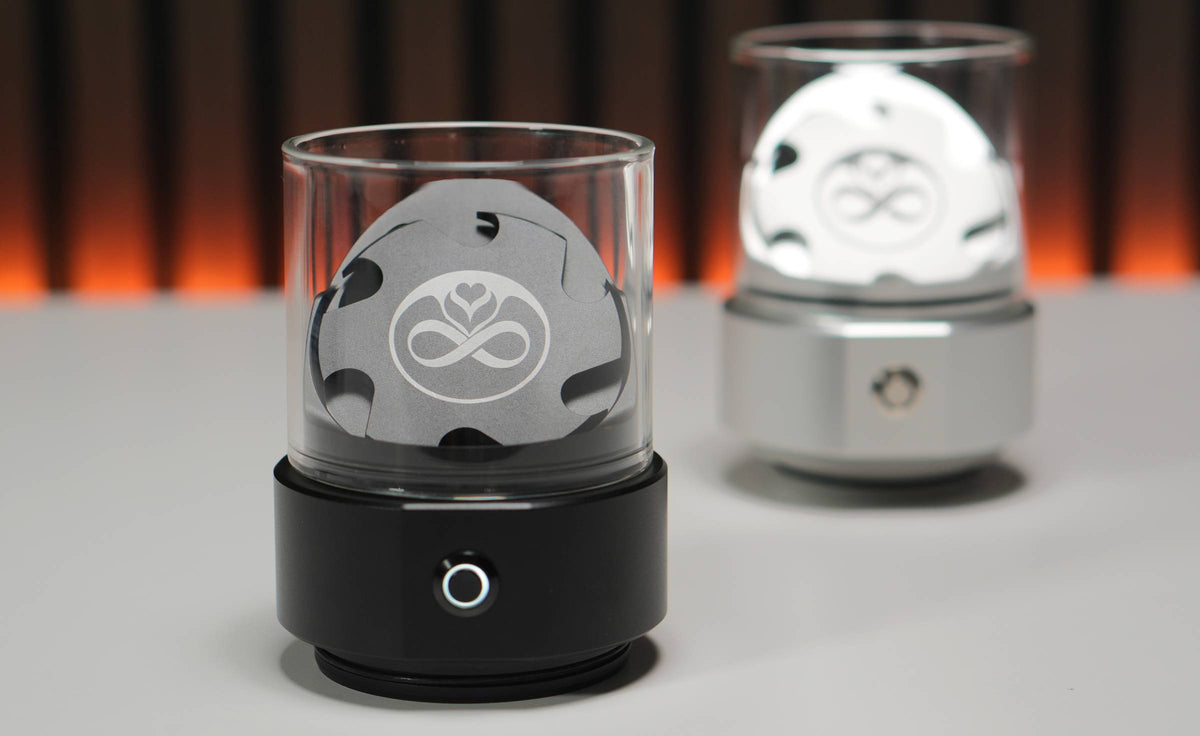
- Precision-machined aluminium for the housing, for strength and a finish that sits well next to a premium grinder.
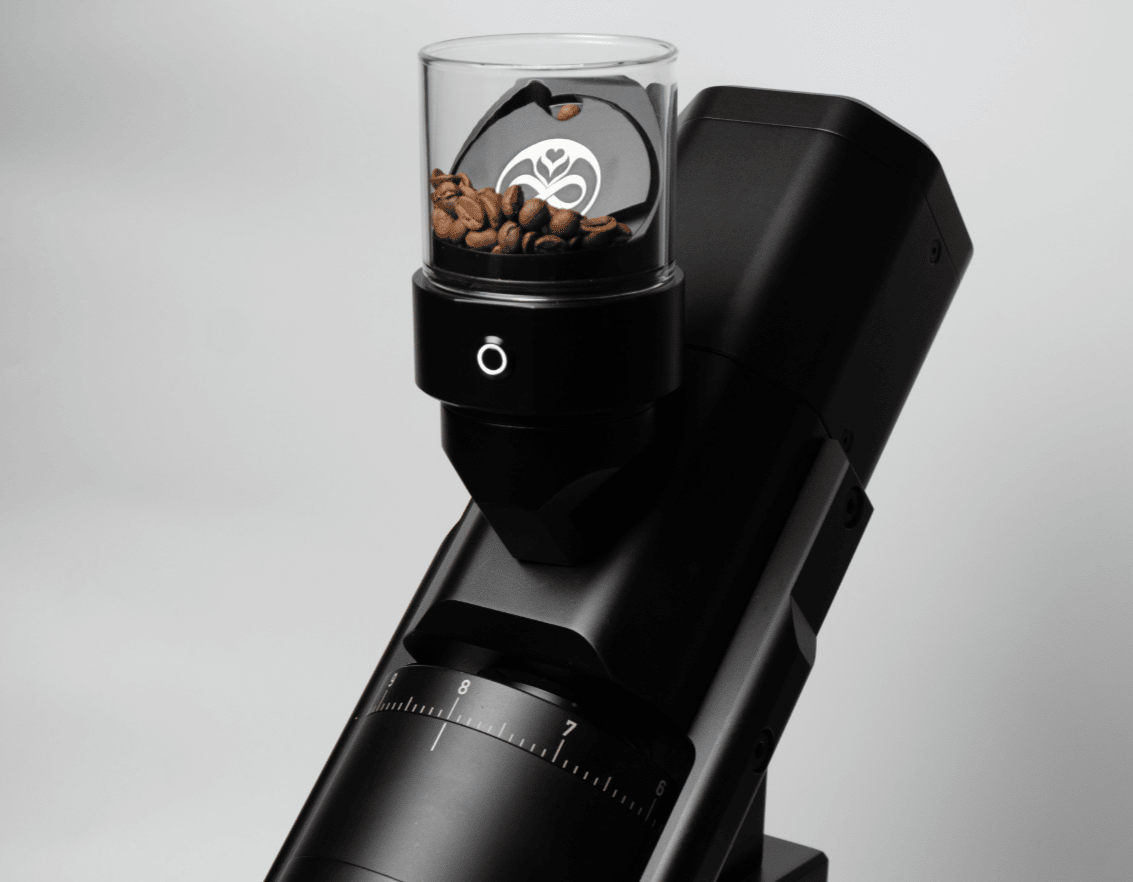
- Borosilicate glass for the bean container: clear and durable.
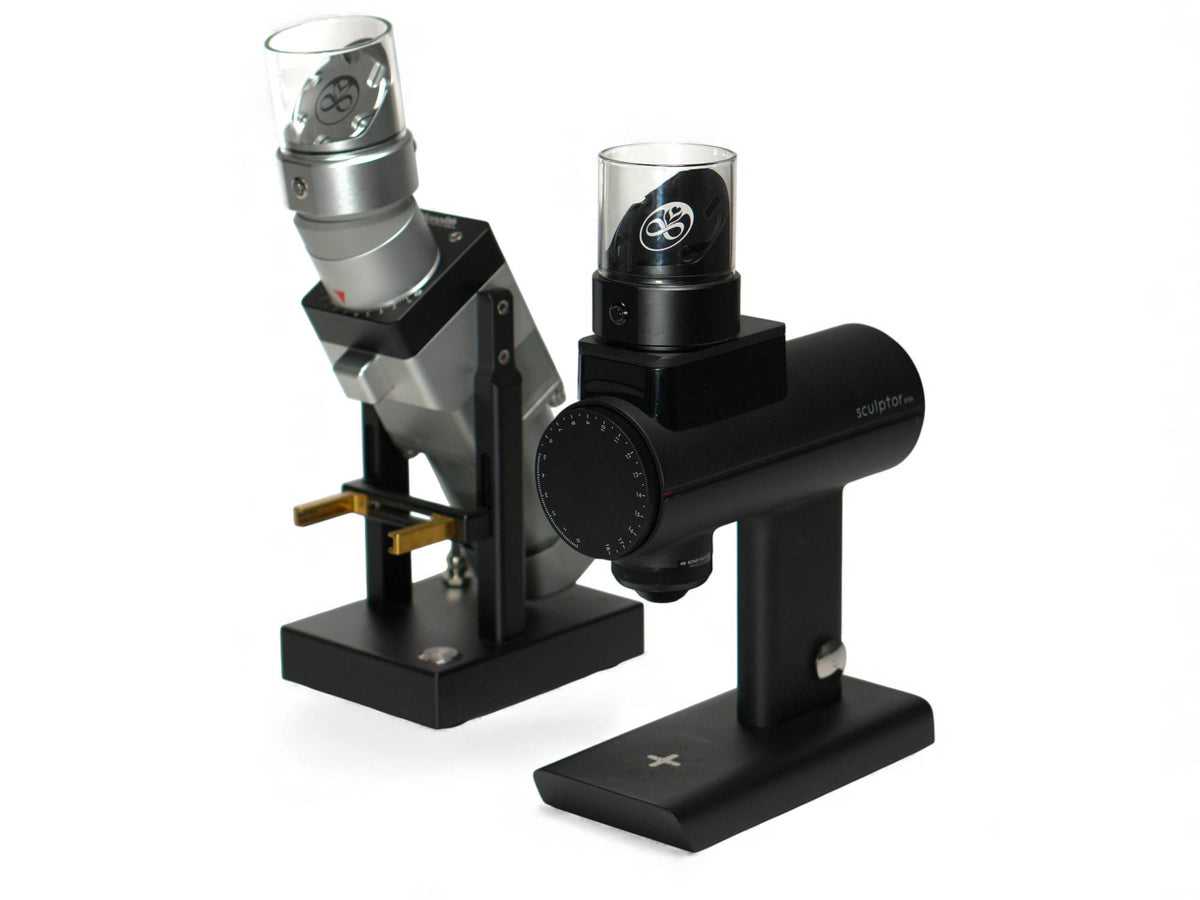
- Three colours: matte black, silver and white, to match the grinder you already love.
Smarter: the anti-stall routine
Some beans, depending on roast, size and shape, can occasionally jam a feeder disc. On the Metal, the feeder handles it on its own:
- It detects the stall.
- It runs a three-step unjam sequence.
- It gets the beans moving again automatically.
That took a fully custom circuit board, careful sensor tuning and a lot of programming. We also added a timed auto-off: if you forget to switch it off after grinding, it powers down after about three minutes.

USB-C power
We replaced the AAA batteries with a built-in 2000 mAh lithium-ion battery that charges over USB-C. One charge gives up to about 20 hours of feeding, which is roughly 1,200 slow-fed doses. For heavy use you can leave the cable plugged in and keep feeding while it charges.
What stayed the same
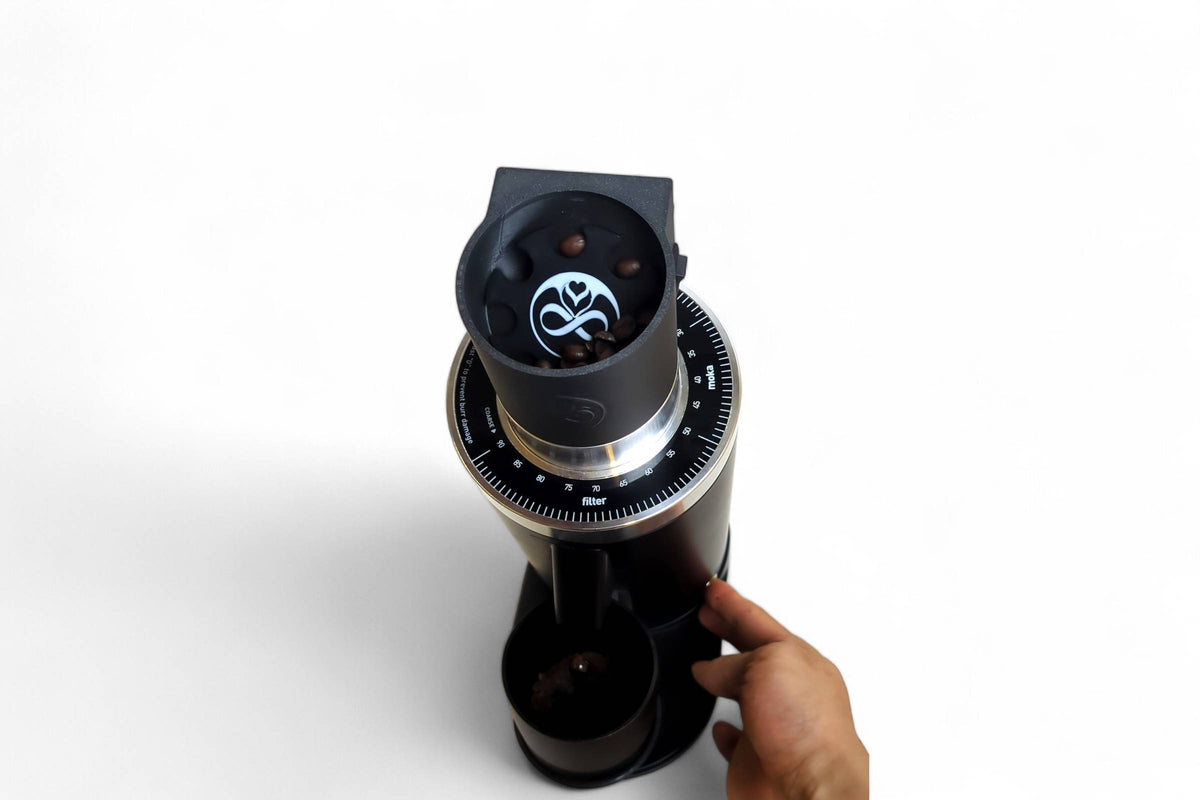
- A grinder adapter for more than 40 grinders, included when you order. The Metal is most popular with the Weber Workshops EG-1, Zerno Z1/Z2, Timemore Sculptor 078, DF64 and DF83, Kafatek Monolith and Lagom P80.
- The optional single dose bellow and lid, which raise the capacity to 100 g and help push out the last grounds.

A launch in waves
We have to be honest: manufacturing a tool like this in small batches is hard. So we launched the Metal in limited pre-order waves, starting with 50 units, to keep quality high from day one. Demand ran ahead of production for months. Today the pre-order waves are complete and the Metal is in stock.
What came after
The Metal became the base for the rest of the range. The Slow Feeder Ultra and the Slow Feeder Pro V2 use the same feeder disc and anti-stall system in lighter, more affordable bodies. And in June 2026 we added machined metal adapters for the Weber Workshops EG-1 and the Lagom 01, the same month a Slow Feeder Metal reached the World Brewers Cup final in Brussels.
The Slow Feeder Metal is designed in Switzerland, in Winterthur.
➡️ Compare Metal, Ultra and Pro V2
Frequently asked questions
How long does the battery last?
Up to about 20 hours of feeding per charge, roughly 1,200 doses. You can also run it while it charges.
What happens if beans jam?
The anti-stall routine detects the stall and runs a three-step unjam sequence automatically.
Which colours are available?
Matte black, silver and white.
Who tested the Slow Feeder Metal before launch?
Lance Hedrick received our first prototype and his feedback shaped the final product.